Explore Distinctive Maple Syrup Flavor Profiles You'll Love
Explore the Flavors of Real Maple Syrup
Maple syrup flavor profiles are the combined impressions of taste, aroma, and mouthfeel that make each bottle distinct. Knowing those profiles helps home cooks, bakers, and curious eaters pick the right syrup for the job. Color, grade, and terroir are the main drivers: lighter syrups tend to be milder, while soil, climate, and tree genetics add floral, caramel, or woody accents. This guide walks you through what flavor profiles mean, how Grade A categories relate to cooking uses, and why single‑origin bottles matter for people who like to taste the difference. You’ll learn how seasonality and small‑batch production shape flavor, how to taste like a pro, and where Spring Break Maple Farm’s single‑origin, handcrafted bottles sit on the spectrum. Along the way we offer practical tasting steps, quick comparison tables, and clear pairing examples so you can shop and cook with confidence.
What maple syrup flavor profiles are — and why they matter
When we talk about a syrup’s flavor profile, we mean its sweetness level, key aroma notes, texture, and finish — in other words, its culinary personality. Those profiles matter because they help you match syrup to food: delicate, floral bottles are best used as a finishing touch, while darker, caramelized syrups stand up to baking and savory glazes. Grade and color are a useful shorthand: lighter syrups usually read as milder and floral, darker ones bring richer, roasted or molasses‑like notes. Understanding that relationship saves time in the kitchen and makes results more consistent.
Below we explain how Grade A categories translate to flavor and everyday uses so you’ll know which bottle to reach for.
How grades map to flavor
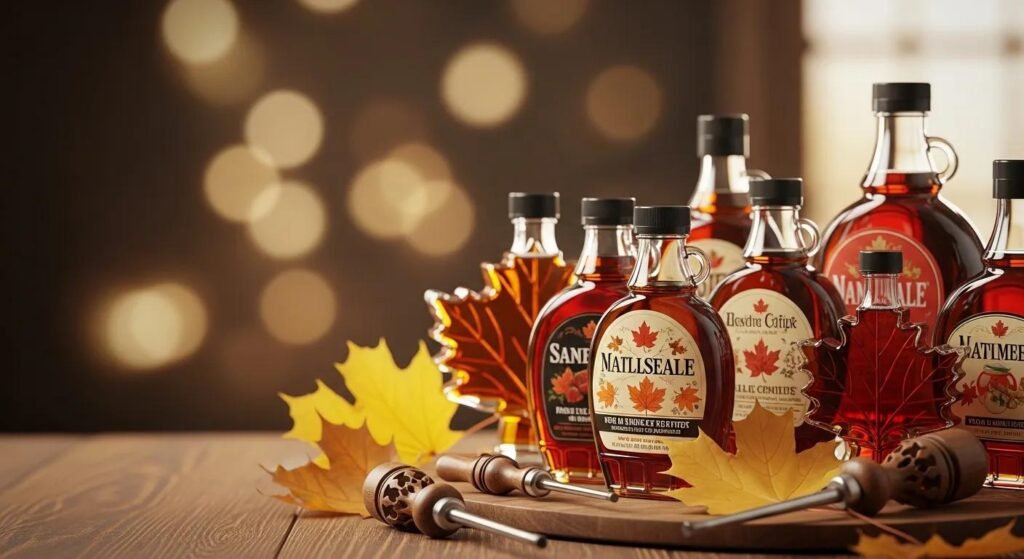
Maple syrup grades give shoppers a predictable signal about color and flavor intensity — they aren’t a simple “better vs. worse” ranking, but a guide to taste. Golden Delicate tends to be lightly sweet with floral or vanilla hints and a clean finish. Amber Rich carries more caramel and toffee notes and works well in baking. Dark Robust moves toward molasses and roasted‑sugar flavors, and Very Dark Strong delivers a bold, bittersweet, slightly smoky profile for intensely flavored dishes. When you know this mapping, choosing syrup for pancakes, sauces, coffee, or food production becomes intentional instead of guesswork.
Next we’ll look at how place and growing conditions — terroir — add another layer of nuance.
How terroir shapes maple flavor
“Terroir” describes how soil, elevation, microclimate, and tree genetics influence sap chemistry and the final taste. Sugarbushes on well‑drained, mineral‑rich soils often yield clearer, brighter aromatics and subtle floral notes. Shadier, denser stands can produce heavier, woodier flavors. Temperature swings during the sugaring season affect sugar concentration and Maillard reactions in the evaporator, so nearby farms can make noticeably different syrup. Single‑origin labels highlight those differences by letting you taste the character of a single sugarbush or region.
Understanding terroir sets the stage for the official grade descriptions and quick comparisons that follow.
The official Grade A categories and what to expect from each
Grade A categories give consistent expectations for color, typical flavor notes, and culinary uses: Golden Delicate for subtle finishing, Amber Rich for everyday cooking, Dark Robust for hearty sauces and glazes, and Very Dark Strong for intense flavor needs. The table below is a fast reference to help you pick the right grade while shopping or planning menus.
| Grade | Typical Color | Common Flavor Notes | Best Uses |
|---|---|---|---|
| Golden Delicate | Light golden | Floral, light vanilla, clean sweetness | Drizzling, tea, yogurt, delicate desserts |
| Amber Rich | Amber | Caramel, toffee, rounded sweetness | Baking, pancakes, sauces, marinades |
| Dark Robust | Dark amber | Molasses‑like, roasted sugar, caramel | Savory glazes, robust baking, coffee |
| Very Dark Strong | Very dark brown | Bittersweet, smoky, intense caramelization | Braising, bold sauces, industrial flavoring |
In short: Golden for nuance, Amber for everyday versatility, Dark for depth, and Very Dark when you need intensity. If you’re after single‑origin, handcrafted options, Spring Break Maple Farm produces family‑made syrups and honey with an emphasis on sustainable practices and traceable provenance.
Here’s a quick guide cooks use when choosing grades for common tasks.
- Golden Delicate: Use when you want a gentle maple note that won’t overwhelm other flavors.
- Amber Rich: The everyday bottle — flexible in both sweet and savory dishes.
- Dark Robust: Reach for this when you want deeper caramel and roasted notes.
- Very Dark Strong: Best for recipes that need a concentrated maple punch or for commercial blending.
With those basics covered, let’s explore the lighter and darker ends of the spectrum in more detail.
What defines Golden Delicate?
Golden Delicate is pale, fragrant, and softly sweet. Expect subtle vanilla and wildflower‑like notes with a short, clean finish. It’s a finishing syrup that complements rather than competes — perfect drizzled over pancakes, stirred into tea, or paired with fresh fruit and yogurt. Chefs and home cooks choose it when balance and elegance matter more than bold maple flavor.
Next: Amber Rich and why it’s a kitchen workhorse.
What makes Amber Rich different?
Amber Rich sits in the middle: warmer color, fuller mouthfeel, and clear caramel and toffee notes. It’s a dependable, all‑purpose syrup that holds up in baking, sauces, dressings, and glazes. Bakers often prefer Amber because it keeps a pronounced maple character through mixing and heat without turning bitter. Its balance of sweetness and complexity makes it a go‑to for everyday cooking.
How darker grades open up different culinary uses
As syrup darkens, flavor intensity rises and the aroma shifts toward roasted, caramelized, and molasses‑like tones. Dark Robust brings a rounded, brown‑sugar character that enhances savory marinades and strong baked goods. Very Dark Strong offers a bittersweet, smoky edge that can anchor bold sauces or be used sparingly in commercial formulations. When substituting darker syrup, reduce the amount by 10–25% and consider adding acid or salt to balance the heavier caramel notes. Used thoughtfully, darker grades add complexity instead of overpowering a dish.
Practical tips for cooking with darker syrups:
- Use less: Cut quantity by about 10–25% to avoid excess sweetness.
- Balance with acid or salt: Vinegar, citrus, or a pinch of salt helps tame heavy caramel flavors.
- Pair with bold ingredients: Meats, roasted roots, and strong cheeses stand up well to darker syrups.
- Test small: Make small adjustments first when switching grades so you can dial in the balance.
Those tips lead into a closer look at Dark Robust and Very Dark Strong.
The profile of Dark Robust
Dark Robust brings pronounced molasses and roasted‑sugar notes with a longer finish than lighter grades. It’s excellent for savory glazes, braises, barbecue sauces, and hearty baked goods where the maple needs to be noticed. Dark Robust also adds depth to coffee or cocoa preparations, lending a toasted complexity. When substituting it for a lighter syrup, reduce the amount slightly and taste as you go.
When Very Dark Strong is the right choice
Very Dark Strong is for recipes that want a concentrated maple signature. It offers bittersweet, smoky, and deeply caramelized notes that can anchor reductions, braises, and commercial flavoring. Chefs and producers value Very Dark for its potency — a little goes a long way. It’s best where other ingredients are assertive, or blended with lighter grades to create a custom profile. Wholesale buyers often select Very Dark for cost‑efficient intensity.
What drives flavor variation from tree to bottle?
Several environmental and production factors shape a syrup’s flavor. Terroir (soil and microclimate), timing in the sugaring season, tree genetics, and boiling technique all alter sap chemistry or how notes develop during evaporation. Small‑batch, handcrafted production tends to preserve nuance by limiting blending and controlling boiling endpoints, while large‑scale production prioritizes consistency and yield. Mapping these factors to flavor helps explain why different bottles taste the way they do and why provenance matters.
The table below links key factors to their flavor effects for quick reference.
| Production/Environment Factor | Attribute | Impact on Flavor |
|---|---|---|
| Terroir (soil, microclimate) | Sap mineral and aromatic profile | Can produce floral, woody, or mineral notes |
| Sugaring Season (early vs late) | Sugar concentration and organic compounds | Early runs = lighter flavors; late runs = richer, roasted notes |
| Tree Genetics | Sap enzyme and sugar composition | Subtle effects on aroma and sweetness balance |
| Boiling & Evaporation | Maillard development and caramelization | Shapes depth, roast, and finish of the syrup |
| Batch Size & Blending | Degree of mixing across runs | Smaller batches preserve nuance; blending evens flavor |
That chart shows why careful producers can bottle distinct single‑origin syrups. At Spring Break Maple Farm we combine sustainable practices and a single‑origin focus to let terroir and seasonality show through in small, handcrafted runs.
How season affects taste
Early season sap tends to be cooler and cleaner, producing lighter, floral syrups. Later in the season, sap often contains more amino acids and other precursors that create deeper caramel and roasted notes during boiling through Maillard reactions — sometimes with slight bitterness. Temperature swings and season length also play a role, so many producers bottle runs separately to preserve seasonal character. For buyers, that means early‑run bottles are more delicate and late‑run bottles are more assertive.
Why handcrafted production matters
Handcrafted production matters because it gives makers control over boiling rate, batch size, and blending choices — all of which shape Maillard reactions and preserve delicate aromatics. Small‑batch evaporation lets producers hit precise endpoints for sugar concentration and caramelization, keeping nuance that high‑throughput operations may smooth out. Selective tapping and careful sap sourcing reduce variability, and good forest management protects long‑term sap quality. Producers who prioritize craft tend to create syrups with stronger, terroir‑driven character.
How to taste maple syrup like a connoisseur
Tasting syrup like a pro means following a simple sequence: look, smell, sip, note the mouthfeel, and check the finish. A routine — visual inspection, controlled aroma checks, an aerated sip, and attention to aftertaste — helps you reliably map descriptors to grade and use. Tasting a range of single‑origin and blended bottles trains your palate to spot terroir and production effects. If you want hands‑on comparisons, try single‑origin bottles to see how soil and season translate to flavor; Spring Break Maple Farm offers family‑made, single‑origin syrups and honey for retail and wholesale buyers.
Use this compact tasting checklist at home to build consistent notes.
| Tasting Step | Focus | What to Note |
|---|---|---|
| Visual | Color and clarity | Grade cues and any sediment |
| Aroma | Nose depth and notes | Floral, vanilla, caramel, roasted, smoky |
| First Sip | Sweetness and texture | Mouthfeel, viscosity, initial flavor |
| Midpalate | Complexity | Secondary notes, acidity, balance |
| Finish | Aftertaste length | Clean, lingering caramel, or bitter/smoky |
Repeat this checklist with different bottles to train your palate and compare grades and origins.
- Prepare: Use small clear glasses and a neutral room to avoid distractions.
- Inspect: Hold the syrup to the light and note color and clarity as a first clue.
- Smell: Warm the glass slightly and take short, controlled inhalations to capture aromas.
- Sip: Take a small sip, draw a little air through it to aerate, and notice midpalate texture and secondary notes.
- Record: Jot down what you smelled and tasted, then compare to known grade profiles to sharpen your sense.
Practicing this routine will help you match descriptors to grades and pick the right syrup for any recipe. The next section explains how descriptors point to specific grades.
How flavor words help identify grades
Flavor descriptors are shortcuts that link what you sense to a likely grade: words like “floral” and “vanilla” usually indicate a lighter, Golden Delicate bottle; “caramel” and “toffee” point to Amber Rich; while “molasses‑like,” “roasted,” or “smoky” suggest darker grades. Learning these associations helps you choose syrups by function — whether you’re finishing a delicate dessert or adding depth to a savory sauce — and makes substitutions more precise.
Now that you can taste with intention, here’s why choosing a producer matters — and how Spring Break Maple Farm approaches flavor and stewardship.
Why choose Spring Break Maple Farm for distinct maple flavors?
Spring Break Maple Farm is a family‑run operation in Smyrna, Maine, offering single‑origin, handcrafted maple syrup and honey with a focus on sustainable forestry and clear provenance. Single‑origin bottles, small‑batch production, and careful forest management let terroir and seasonality show through instead of masking them with heavy blending. Whether you’re a home cook, chef, or food producer, a traceable, family‑made bottle gives you a clearer sense of place and production — and that consistency is exactly what we aim to offer.
How sustainable practices improve syrup quality
Sustainable practices — selective tapping, managing forest health, and efficient evaporation — protect the sugarbush and keep sap quality steady year after year. Healthy trees and balanced tapping schedules reduce stress on the stand, helping preserve delicate aromatics. Thoughtful evaporator use and careful batch control prevent over‑caramelization while allowing nuanced Maillard development. Our family approach also means transparency with customers and support for local businesses, connecting environmental stewardship with sensory and ethical value.
What single‑origin from Maine brings to the bottle
Single‑origin syrup comes from one sugarbush or clearly defined place, so you taste the site’s fingerprint — the soil, microclimate, and forest mix — rather than a regional blend. Maine’s cool nights and mixed woodlots often yield syrups with a balance of floral and woody notes, and a Smyrna origin typically produces bottles that reflect those local traits. Single‑origin bottlings let connoisseurs and professionals track seasonal and terroir variation, and Spring Break Maple Farm’s handcrafted offerings let buyers experience those distinctions directly.
- Try different grades: Sample Golden, Amber, Dark, and Very Dark to map the flavor range.
- Compare single‑origin runs: Taste two bottles from the same farm across seasons to hear terroir and time.
- Record tasting notes: Log aroma and finish to refine pairings and substitution choices.
Frequently Asked Questions
What is the best way to store maple syrup to maintain its flavor?
Store unopened syrup in a cool, dark pantry. Once opened, refrigerate to slow spoilage. Large quantities freeze well in airtight containers and won’t lose flavor when frozen. Always check for off‑odors, unusual cloudiness, or mold before using — those are signs the syrup may have spoiled.
Can maple syrup be used in savory dishes, and if so, how?
Absolutely. Maple syrup adds depth and balance to savory recipes — use it in glazes, marinades, sauces, and dressings. It pairs well with mustard, soy, vinegar, or citrus to create savory‑sweet finishes on roasted vegetables, pork, or chicken, and it brightens dressings and barbecue sauces.
How can I tell if my maple syrup has gone bad?
Pure maple syrup has a long shelf life, but it can spoil. Look for an off smell, unusual cloudiness, or visible mold. If mold appears only on the surface, you can skim it off, bring the syrup to a brief boil to sanitize, and then refrigerate — but if the smell or flavor is off, it’s safer to discard it.
What are some creative ways to use maple syrup beyond pancakes?
Maple syrup is versatile: drizzle it over oatmeal, yogurt, or ice cream; use it as a sugar substitute in baking; add it to cocktails; or glaze meats and roasted vegetables. It also makes a great base for dressings and sauces where you want a natural, complex sweetness.
Is there a difference between pure maple syrup and imitation maple syrup?
Yes. Pure maple syrup is made from tree sap boiled down to concentrate flavor. Imitation syrups are typically sweeteners made from corn syrups with added flavoring and lack the complexity and natural origin of real maple. For true maple character, look for “100% pure maple syrup” on the label.
How does the flavor of maple syrup change with different grades?
Grade reflects color and flavor expectations. Lighter grades like Golden Delicate taste mild and floral; Amber Rich brings caramel and toffee notes; darker grades like Dark Robust and Very Dark Strong move toward molasses, roasted, and smoky flavors. As color deepens, intensity usually increases, so choose by the flavor role you need.
Conclusion
Knowing maple syrup flavor profiles makes cooking and pairing simpler and more satisfying. By understanding grades, terroir, and production choices, you can pick syrups that fit your recipes and taste preferences. Explore Spring Break Maple Farm’s single‑origin, handcrafted offerings to experience syrups that reflect place and season. Start tasting intentionally — a small change in syrup can lift a dish in a big way.